
- Fifty years after opening, Jamsugyo Bridge to be fully transformed from a vehicle-focused bridge into a pedestrian-only bridge where residents can walk and spend time.
- Vehicle access to be permanently restricted from midnight on Monday, October 26; pedestrians and cyclists can continue using the bridge during construction.
- Twenty-two new viewing areas to be added, creating a waterfront space where residents can relax and enjoy cultural activities close to the water.
- Pedestrian space to extend to the underpass at the northern end of Jamsugyo Bridge, improving connectivity between Itaewon and the Hangang River.
- Minimal traffic impact expected on Banpo Bridge; bus routes 740 and 405 to be rerouted, with measures to minimize inconvenience to residents.
SEOUL, SOUTH KOREA, October 13, 2026 — In the second half of 2027, Jamsugyo Bridge, which has a 50-year history, will be transformed into a pedestrian-only space where residents can enjoy up-close views of the Hangang River, relax, and experience cultural activities.
The Seoul Metropolitan Government announced that construction to transform Jamsugyo Bridge into the city’s first pedestrian-only bridge over the Hangang River will begin on Monday, October 26. Vehicle traffic on the bridge will be completely prohibited from midnight on October 26, following this year’s final Car-Free Jamsugyo Walking Festival. The restriction will remain in place even after the completion of the project.
Since opening in 1976 as a bridge for vehicle traffic connecting the northern and southern banks of the Hangang River, Jamsugyo Bridge has helped residents travel between the two sides of the river. In 2008, two of its original four traffic lanes were converted into spaces for pedestrians and cyclists. More recently, the bridge has been used as a cultural space where residents can enjoy the Hangang River through events such as the Car-Free Jamsugyo Walking Festival.
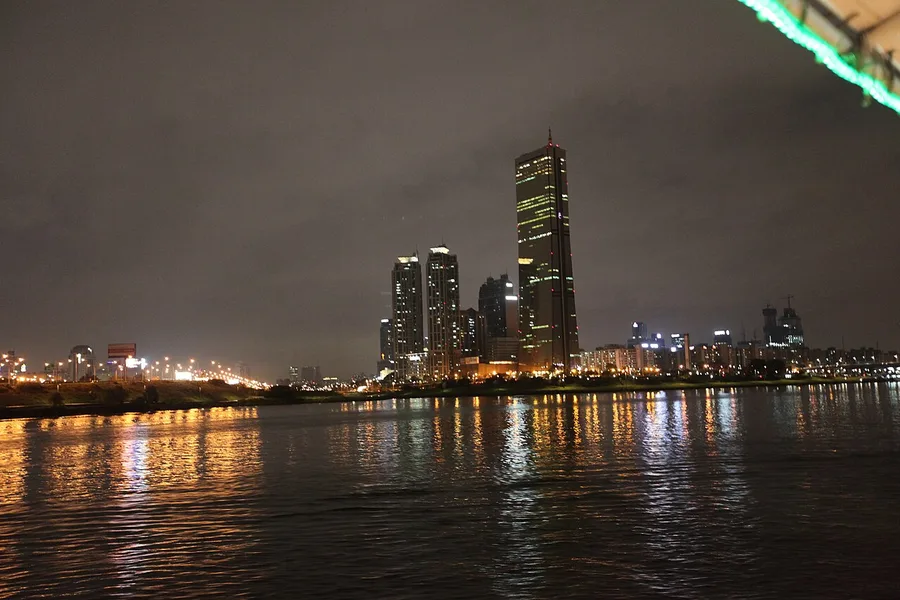
Compared with other bridges over the Hangang River, Jamsugyo Bridge sits closer to the water, offering views of the river and surrounding scenery, as well as an up-close view of the Moonlight Rainbow Fountain on Banpo Bridge. Seoul plans to make the most of this unique setting by transforming the bridge into a pedestrian space where visitors can enjoy the Hangang River’s natural surroundings and cultural offerings.
Pedestrians and cyclists will continue to have access to Jamsugyo Bridge throughout construction. To minimize inconvenience, the city will maintain space for pedestrians and cyclists and separate it from construction areas to ensure safe passage.
As Jamsugyo Bridge is transformed into a pedestrian-only bridge, 22 new viewing areas will be added, allowing visitors to enjoy the Hangang River up close. The expanded pedestrian space will allow residents to take a break while walking across the bridge or stop to enjoy views of the river.
During the design process, the city revised the original proposal to address flood safety and other considerations, removing the elevated pedestrian decks included in the initial design. The city has completed consultations with the Han River Basin Environmental Office on the revised design.
In particular, transparent decks will be installed in two sections of the bridge where vessels pass underneath, allowing visitors to look down at the Hangang River. Watching the water flow beneath their feet will offer visitors a unique experience not found on other bridges over the Hangang River.
The project will also extend the pedestrian-only space to the underpass at the northern end of Jamsugyo Bridge, converting the entire roadway in this section for pedestrian use. This will improve an access route that has been difficult to navigate on foot due to vehicle exhaust, noise, and narrow walkways, providing a safer and more pleasant walking connection from the Yongsan and Itaewon areas to the Hangang River.
Once the transformation is complete, Jamsugyo Bridge will become more than just a route for crossing the river, serving as a waterfront cultural space where residents can spend time and enjoy leisure activities. Seasonal outdoor festivals, street performances, flea markets, and other cultural programs are expected to provide more opportunities for residents and tourists to enjoy the Hangang River in their everyday lives.
Meanwhile, the closure of Jamsugyo Bridge to vehicle traffic is expected to have only a limited impact on traffic on surrounding roads. According to a traffic impact analysis, diverting traffic from Jamsugyo Bridge to Banpo Bridge is expected to result in only a slight decrease in travel speeds, while the overall traffic level of service will remain unchanged.
To minimize inconvenience, Seoul will inform residents in advance about alternative routes and changes to bus services. Details of detours and bus stop changes will be communicated through on-site notices, announcements on buses, and the Seoul Transport Operation and Information Service (TOPIS). Navigation systems will also be updated to reflect the detours.
City bus routes 740 and 405, which currently operate via Jamsugyo Bridge, will be rerouted over Banpo Bridge in both directions. As a result, the “Banpo Hangang Park–Some Sevit” bus stops in both directions at the southern end of Jamsugyo Bridge will be closed. Passengers can instead use the nearby “Banpodaegyo Bridge Southern End Hangang Park Entrance” bus stops.
댓글 0
첫 댓글을 남겨 보세요.
로그인 후 댓글을 남길 수 있어요.